Home
This wiki is created as a hand-book for the workshop Open Source India 2025 - Automating CI Workflows with GitHub Actions. And has all the steps required to setup GitHub Actions on your repository.
DevOps is a set of practices that combines software development and IT operations. It aims to shorten the systems development life cycle and provide continuous delivery with high software quality. DevOps is complementary with Agile software development. Several DevOps aspects came from the Agile way of working.
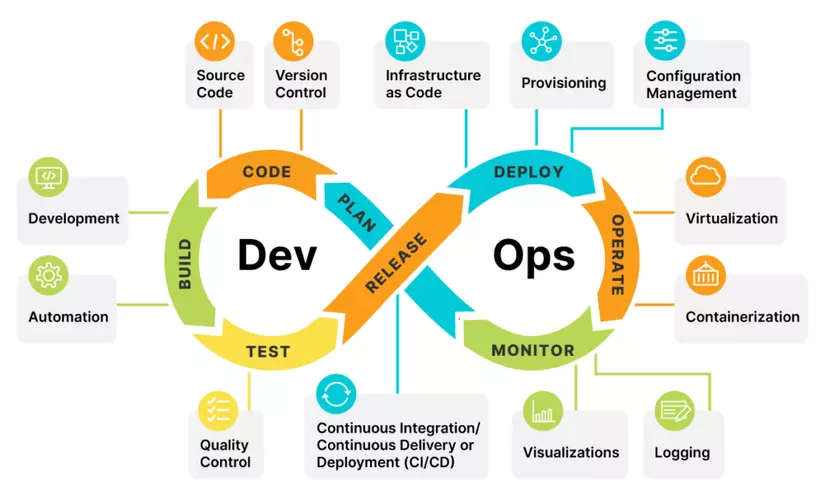
DevOps Cycle
DevOps complements the Agile methodology, several aspects of DevOps come from the Agile way of working:
- Start the sprint:
- Plan: Plan and design the features that will evolve in the sprint
- Code: functional coding/bug fix as planned above
- Build: encapsulates the outputs of the coding process by building
- Test: testing on a build in a development (dev) environment
- Release (Integrate): after the build is in the dev pass environment, the release will be sent to the Operation team to build and test again
- Deploy: deploy code to STG/PRD environments
- Operate: maintain and operate the product
- Monitor: measure and track products to get feedback for the sprint after the end of the sprint.
- Start a new sprint...
Continuous Integration (CI) is a software development practice where developers frequently merge their code changes into a shared repository, triggering automated builds and tests to quickly detect and fix integration issues that break the existing functionality. This approach promotes early bug detection, improves code quality, and enables faster delivery of software by ensuring that new code integrates smoothly with the existing codebase. CI is a key component of modern DevOps workflows and is often paired with Continuous Delivery (CD) and deployment to streamline the entire development lifecycle.
- Developers commit their code changes to a version control system like Git.
- The CI pipeline is triggered, which fetches the changes and runs automated build and unit tests.
- The server notifies the developers about the success or failure of the integration.
Continuous Delivery (CD) is the practice of automating the release of validated code to a repository. It ensures that the code is always in a deployable state and can be released to production at any time. CD involves automated testing, integration, and deployment processes to minimize manual intervention and reduce the risk of errors.
- After CI, the code is deployed to a staging environment where it undergoes further automated testing (e.g., integration testing, regression testing).
- The code is then ready for deployment to the production environment.
- The final deployment to production can be triggered manually by the developer or project lead.
Continuous Deployment is an extension of continuous delivery, where the deployment to production is fully automated. This means that any code change that passes the automated tests is automatically deployed to production without any manual intervention. Continuous deployment relies heavily on well-designed test automation to ensure that the code is production-ready.
- Faster Release Cycles: CI/CD enables faster and more frequent releases, allowing organizations to deliver new features and updates to customers quickly.
- Improved Software Quality: Automated testing and integration help in detecting and fixing bugs early, resulting in higher software quality.
- Reduced Manual Effort: Automation reduces the need for manual intervention, freeing up developers to focus on more critical tasks.
- Increased Collaboration: CI/CD fosters collaboration between development and operations teams, leading to better communication and coordination.
There are various tools available for implementing CI/CD pipelines. Some popular ones include:
- Jenkins: An open-source automation server that can handle CI and CD tasks.
- GitLab: A web-based DevOps lifecycle tool that provides a Git repository manager, CI/CD pipeline, and more.
- CircleCI: A continuous integration and delivery platform that automates the build, test, and deployment process.
- Travis CI: A continuous integration service used to build and test software projects hosted on GitHub.

Top 20 CI/CD Tools
In conclusion, CI/CD is a crucial practice in modern software development that helps in automating and streamlining the integration, testing, and deployment processes. By adopting CI/CD, organizations can achieve faster release cycles, improved software quality, and increased collaboration between development and operations teams.
- Content generated with Microsoft Copilot
- Figure-DevOps Cycle: aithietke.com
- Figure-Common CI CD Platforms slideshare.net
- Figure-Top 20 CI/CD Tools: mindbowser.com